
Tiny Space Arena: 1v1 battles
HC GLOBAL DISTRIBUTION LIMITEDStrategy
4.7243.00 Reviews
- Version
- 1.0.5
- Installs
- 100.00K
- Age Rating
- Everyone
Screenshots
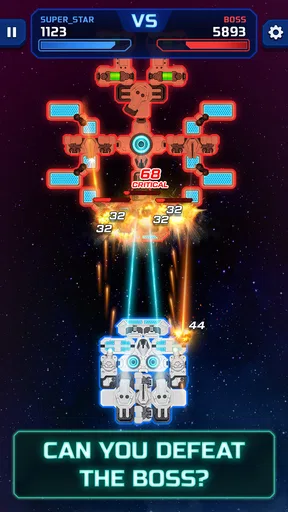
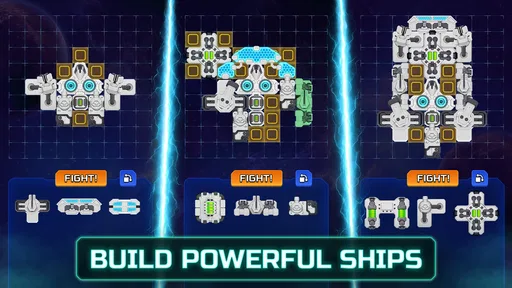
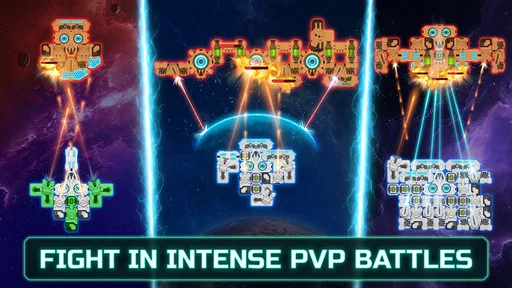
Our Review of Tiny Space Arena: 1v1 battles
 Analysis by Appyee
Tiny Space Arena: 1v1 battles caught my attention because it aims for a very focused kind of space strategy: building a small ship, putting it into a direct contest, and making decisions without the weight of a huge galaxy-management system. After spending time with it, I found a game that is easiest to appreciate as a compact tactical experience rather than as a full-scale space simulator. Its appeal comes from the combination of a miniature sci-fi setting, short competitive encounters, and the satisfaction of adjusting a ship until its design makes sense in battle.
It is a free strategy game from HC GLOBAL DISTRIBUTION LIMITED, rated for Everyone. The game has a 4.7 average from around 14 thousand ratings and has passed 100 thousand installs, which suggests that its simple idea has found a receptive audience. It was released on September 12, 2025, and the current version is 1.0.5. I tested it with the mindset of someone looking for a quick game between other tasks, but also paid attention to whether the ship-building element actually supports meaningful decisions.
Small ships, clear choices, and an inviting first impression
The first thing that works in Tiny Space Arena is its sense of scale. Instead of presenting space as an enormous, intimidating map, it turns the idea of a starship into something almost toy-like and manageable. That does not make the setting feel empty. On the contrary, the compact presentation helps the game communicate its central promise quickly: this is about making a vessel, seeing how it performs, and learning from the result.
I like that the game does not need a long explanation to establish its identity. The visual language points toward a light, accessible version of science fiction, while the 1v1 focus gives every encounter a clear purpose. You are not wandering through a complicated universe looking for the next objective. You are preparing for a contest, watching the outcome, and deciding what to change. That direct loop makes it easy to pick up when I only have a few minutes available.
The free entry point also helps. Anyone can try the game without paying first, although optional purchases range from $0.29 to $99.99 per item. That broad range is worth keeping in mind before getting invested. My advice is to treat the free experience as the test: play long enough to decide whether the building and battle rhythm suit you, and do not assume that spending automatically replaces experimentation. The most useful progress comes from understanding why a design succeeds or fails, not simply from choosing the most expensive option.
On a phone, the small-scale concept is especially comfortable. The game feels more appropriate for portrait-sized attention than for a long session in front of a monitor. I can imagine opening it while waiting for an appointment, playing a few encounters, and closing it without feeling that I have abandoned a complicated campaign. That convenience is one of its strongest practical advantages over larger strategy games that demand more uninterrupted time.
There is also a welcome sense of approachability in the age rating. With an Everyone content rating, the presentation is positioned for a broad audience rather than for players looking for harsh realism or intense mature themes. Parents should still remember that free games with in-app purchases deserve the usual attention to spending controls, but the overall tone is much more playful than aggressive.
A miniature universe with a consistent visual language
The art direction is most successful when it keeps the game’s ideas visually close together. The ship is not merely a menu object, and the arena is not just a background. Together they create the impression of a small mechanical universe where design choices can be understood at a glance. I found that clarity more valuable than visual excess. A crowded interface or overly realistic presentation would work against the game’s pocket-sized identity.
That miniature quality affects how I read each battle. A starship becomes something I can mentally take apart: its shape, its apparent purpose, and the way it behaves once the contest begins. Even without turning the experience into a technical simulator, the game encourages a designer’s way of thinking. I stop asking only whether I won and start asking what the ship was trying to do. Was the arrangement too ambitious? Did the design lack balance? Did the result expose a weakness that was not obvious before launch?
This is one of the less obvious strengths of the game. The visual simplicity can make failure easier to study. In a larger strategy title, defeat may be buried under resource shortages, map position, diplomacy, and dozens of other variables. Here, the compact setting keeps attention closer to the ship and the immediate contest. That makes it a useful introduction for players who enjoy strategy but are put off by dense interfaces.
The trade-off is that players who expect a richly detailed space opera may find the world intentionally thin. This is not the right choice if your ideal science-fiction game involves exploring a large narrative universe, managing colonies, or following a dramatic campaign. The setting works as a frame for the battles rather than as a separate story that constantly demands attention. I think that restraint is sensible, but it will not satisfy everyone.
I also found that the art direction supports quick recognition. When a game is built around repeated 1v1 encounters, the player needs to understand what is happening without pausing to decode every screen. A compact visual style can make the difference between a battle that feels readable and one that feels like a blur of effects. Tiny Space Arena generally benefits from keeping its identity straightforward: small craft, direct opposition, and a clean science-fiction mood.
How sound and pacing shape the mood
The game’s atmosphere depends as much on pacing as on its space imagery. A battle-focused strategy title can easily become tiring if it stretches every decision or floods the player with interruptions. Tiny Space Arena feels better when I approach it as a sequence of deliberate tests. I make a design choice, watch what happens, and use the result to guide the next attempt. That rhythm gives the game a natural stop-and-start structure.
Sound contributes to the feeling that each contest is an event rather than a spreadsheet calculation. I prefer to play with audio enabled when I want the full mood, because the combination of science-fiction presentation and battle feedback makes the encounters feel more immediate. At the same time, the compact format means the game remains suitable for quick sessions when I need to keep the volume low or off. The visual information carries much of the experience on its own.
The important point is not whether the game tries to imitate a huge cinematic space battle. It does not need to. Its mood is more contained: a small arena, a crafted machine, and a short burst of tactical pressure. That coherence helps the presentation feel intentional. The setting, sound, and pacing are all working toward the same idea of a concentrated contest.
For everyday use, this makes the game easier to fit into a routine than many strategy alternatives. I can play it during a short break without needing to remember a complicated story thread or reconstruct a large map. A realistic scenario would be a commute with a few spare minutes: I could review a ship idea, enter a battle, and stop after the result. The game’s structure respects that kind of fragmented attention better than a long-form empire builder.
Still, the same pacing can feel repetitive if I play for too long without changing my approach. Short encounters are satisfying when each one teaches me something, but they lose impact if I treat them as automatic rounds. My best sessions come from setting myself a small experiment, such as changing one part of a design or trying a different tactical intention, rather than rushing through battles simply to accumulate results.
Where the building and battling fit together
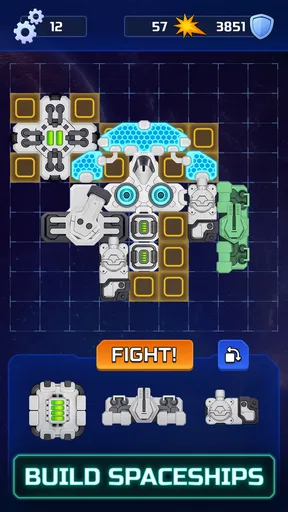
The core mechanical question is whether ship construction matters beyond decoration. In my experience, the building element is most enjoyable when I use it as a way to form a hypothesis. I create a craft with a particular purpose, put it into a 1v1 battle, and then compare the outcome with what I expected. That process turns the game into a practical lesson in trade-offs, even when the rules remain accessible.
One useful habit is to change only one design decision at a time. If I alter everything after a loss, I cannot tell which adjustment helped. Keeping the rest of the ship similar makes the next battle more informative. This is a small but important workflow, especially for new players who might otherwise treat every defeat as a reason to rebuild from scratch. The game becomes more strategic when I use battles as feedback rather than as simple win-or-lose screens.
Another tip is to build for a clear purpose instead of trying to make a ship that does everything. A general-purpose design may sound safe, but a focused craft gives me a better way to judge the result. If the ship succeeds, I learn what specialization can do. If it fails, I have a clearer idea of what its weakness was. That approach also gives the compact matches more personality, because each battle becomes a test of an idea rather than a routine exchange.
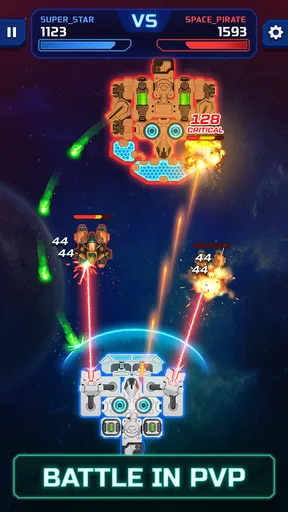
The 1v1 format is a major part of the game’s character. With only two sides involved, the contest is easier to read than a crowded free-for-all. I can concentrate on the relationship between my design and the opponent instead of tracking several threats at once. This makes the game a good fit for players who enjoy controlled tactical decisions and a poor fit for anyone seeking the unpredictability of large multiplayer battles or massive real-time conflicts.
Compared with traditional strategy games, the experience is narrower but more immediate. A typical empire-building title offers diplomacy, territory, research, and long-term economic planning. Tiny Space Arena replaces that breadth with a closer look at the ship and the encounter. Compared with action-oriented space games, it asks me to think more about preparation and adaptation than reflexes. The result sits in an appealing middle ground: more thoughtful than a purely arcade battle, but less demanding than a full simulation.
There are limits to that approach. Players who need a deep campaign, a large roster of systems to master, or a strong narrative reason to continue may eventually feel that the compact loop does not provide enough variety. The game’s strength is focus, and focus always means leaving some possibilities out. I would rather see that limitation clearly than pretend this is a replacement for every other kind of space game.
The current version is 1.0.5 and requires Android 8.0 or later. That makes compatibility fairly approachable for many Android users, though anyone on an older device should check the operating system before trying to install it. Because the game is designed around short, visually clear encounters, it makes more sense on a phone that can display the interface comfortably than on a device where small controls feel cramped.
I would also recommend deciding in advance how you want to handle purchases. The game is free, but the listed in-app purchase range reaches from $0.29 to $99.99 per item. That does not automatically make the experience unsuitable, yet it does change how I evaluate it. I would not recommend it to someone who wants a completely purchase-free environment without monitoring. For everyone else, the sensible approach is to enjoy the building loop first and regard spending as optional rather than necessary to understand the game.
Who will enjoy it, and who should choose something else?
I think Tiny Space Arena is a strong match for players who enjoy designing small systems, learning through repeated tests, and playing in short sessions. It is also a good starting point for someone curious about strategy games but unwilling to spend an evening learning a complicated interface. The direct 1v1 structure gives new players a manageable problem, while the ship-building focus offers enough room for personal experimentation.
It may also suit creative players who like to give practical meaning to visual choices. The satisfaction is not only in seeing a ship on screen; it is in making a design, watching it behave, and refining the idea. That makes the game useful as a casual thinking exercise. I can play it when I want something more active than a puzzle but less demanding than a full competitive strategy session.
I would steer away from it if your priority is a broad space adventure with exploration and story. I would also suggest a conventional strategy game instead if you want long-term territory control, detailed economies, or many interacting factions. Likewise, players who prefer direct action and precise manual control may find the preparation-and-result rhythm too indirect. This game asks me to enjoy the design process as much as the battle itself.
One practical question is whether it works for occasional players. Yes, that is probably its best use. Its compact structure does not require the same commitment as a campaign-driven strategy title, and the small arena keeps the objective easy to remember. I would still play thoughtfully rather than mindlessly, because the experience is at its best when each match answers a question about the ship.
Another question is whether the game is suitable for younger players. Its Everyone rating and light science-fiction presentation make it broadly accessible, but adults should still supervise or manage purchases if the device is shared. The free download lowers the barrier to trying it, while the purchase range means household spending settings remain relevant.
A coherent mood with a deliberately narrow ambition
My final impression is that Tiny Space Arena succeeds because its presentation and mechanics point in the same direction. The miniature space setting makes ship design feel approachable, the focused 1v1 format keeps battles readable, and the pacing supports short sessions without pretending to be an enormous galaxy simulator. I especially value the way the game invites experimentation: build with a purpose, observe the result, and make a measured adjustment.
Its weaknesses are closely connected to its strengths. The focused loop can become repetitive during long sessions, and the compact setting will not replace a story-rich space adventure or a deep empire-management game. The presence of in-app purchases also means I would approach it with sensible spending limits. Those are important considerations, but they do not undermine the central idea.
My recommendation is to try it if you want a friendly, compact strategy game where every battle can act as a design test. I would recommend it to a friend who likes tinkering, quick tactical sessions, and a playful science-fiction atmosphere. I would not recommend it as the only space game in your library if you are looking for a huge universe or a long campaign. Within its chosen scale, however, the game has a clear personality and a satisfying reason to keep rebuilding one more ship.
Verdict
Strengths of Tiny Space Arena: 1v1 battles
- Quick 1v1 matches fit well into short gaming sessions.
- Simple controls make the game easy to pick up.
- Small arenas keep battles focused and fast-paced.
- Different fighters can support varied play styles.
- Competitive matches offer a clear reason to keep improving.
Limitations of Tiny Space Arena: 1v1 battles
- The small player base may sometimes cause longer matchmaking waits.
- Repeated arenas and matchups can make sessions feel predictable.
- Fast battles may feel stressful for players who prefer slower gameplay.
- Progression may feel limited after mastering the available fighters.
- Online play can be affected by lag or unstable connections.
Similar Picks in This Category
View All
Clash of Clans
Supercell4.5

Plants vs. Zombies™
ELECTRONIC ARTS3.7

Lords Mobile: Kingdom Wars
IGG.COM4.5

Clash Royale
Supercell4.4

State.io — Conquer the World
CASUAL AZUR GAMES4.1

Car Driving School : Car Games
Spark Game Studios3.9
Frequently Asked Questions
What is Tiny Space Arena: 1v1 battles?
Tiny Space Arena: 1v1 battles is a competitive space-themed game focused on short, head-to-head matches. Players control a small spacecraft and face another opponent in an arena where movement, aiming, timing, and tactical decisions matter. The compact format makes it easy to play a quick round, while the direct competition provides enough challenge for players who enjoy improving their skills and testing different strategies.
How do the 1v1 battles work?
Each match places you directly against a single opponent in a confined space arena. You generally need to maneuver carefully, avoid incoming attacks, position your ship effectively, and strike at the right moment. Because there are no large teams to hide behind, every mistake can make a difference. Matches are designed to be relatively quick, making the game suitable for short sessions as well as repeated competitive play.
Is Tiny Space Arena: 1v1 battles suitable for beginners?
Yes, beginners can start playing, although winning consistently may require practice. The basic concept is easy to understand: control your ship, survive the confrontation, and defeat the opposing player. However, mastering movement, attack timing, arena positioning, and defensive reactions takes time. New players should expect a learning period, especially when facing experienced opponents, but the simple match structure makes it easy to learn through repeated battles.
Does the game require an internet connection?
An internet connection may be needed for online 1v1 matchmaking, opponent synchronization, leaderboards, and other connected features. Availability of offline play can depend on the specific version and platform, so players should check the app store listing and the in-game requirements before downloading. A stable connection is recommended during competitive matches because interruptions, latency, or disconnections can negatively affect controls and results.
Is Tiny Space Arena: 1v1 battles free to download, and does it include in-app purchases?
The game may be available as a free download, but the exact pricing model can vary between Android and iOS and may change after updates. Some versions of competitive mobile games include advertising, optional purchases, cosmetic items, upgrades, or other paid content. Before installing, review the current store listing for information about ads, in-app purchases, age ratings, permissions, and device compatibility so you know what to expect.
Play our best games!


